Dotseth: House Passes Key Anti-Fraud Bill
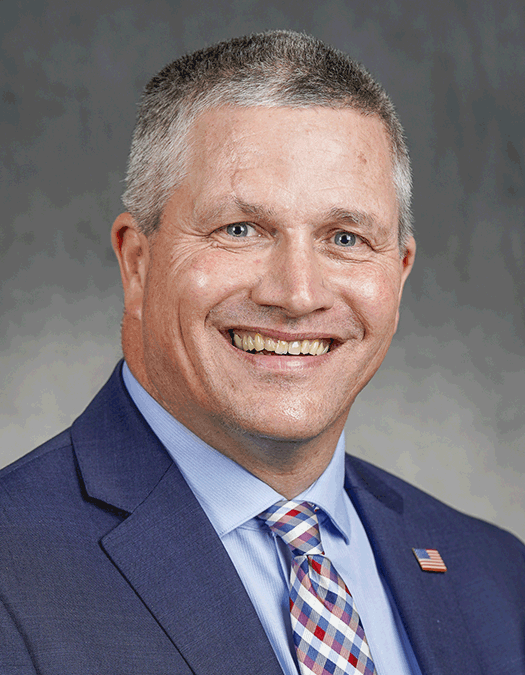
ST. PAUL – State Rep. Jeff Dotseth, R-Silver Township, said Republicans scored a major victory Thursday as the House passed significant anti-fraud legislation by a 127-5 vote.
The bill (S.F. 856) creates an Office of the Inspector General that would operate independently with future law enforcement authority. Dotseth said this is an important step toward providing more transparency and accountability in state government to help get a handle on fraud that has cost state taxpayers $9 billion or more by some estimates.
House Republicans, Dotseth said, have insisted on establishing a truly independent Office of the Inspector General that has enforcement authority to address Minnesota’s rampant fraud problem. Meanwhile, Democrats sought to amend these components out of the proposal soon after the session started in mid-February, grinding progress to a halt for more months on end in Minnesota’s tied House.
“House Republicans have stood firm that this office needs real independence and the authority to act instead of just issuing reports that admire our state’s fraud problem without doing anything about it,” Dotseth said. “The reforms we fought for are key to protecting Minnesotans’ tax dollars and are a good step forward addressing Minnesota’s fraud problem.”
Dotseth said the finished product closely resembles legislation which passed the Senate on a 60-7 vote last year before Democrats blocked it from passing the House. The legislation that passed the House on Thursday makes the OIG responsible for investigating state agencies, grant recipients, and contractors. It would have subpoena power and the authority to freeze or stop distribution of funds under court order. Per the bill, the OIG would be housed in the executive branch due to constitutionality concerns, and to permit the office to have law enforcement authority, Dotseth said.
Federal officials have estimated that fraud within Minnesota’s social services and Medicaid programs could total $9 billion or more. This figure stems from investigations into 14 different high-risk Medicaid programs, with officials suggesting that half or more of the roughly $18 billion billed since 2018 may be fraudulent.
Upon enactment of this bill, Minnesota would join around 15-20 U.S. states that have a statewide OIG with broad oversight over executive agencies, Dotseth said. It is now in the hands of the Senate.